SAKEC is an Autonomous Institute Affiliated to University of Mumbai

EXTC STTP

Agentic AI for Service Sector Applications: Healthcare, Education, Finance and Beyond

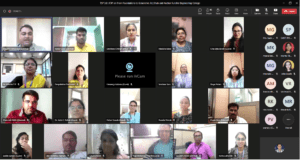
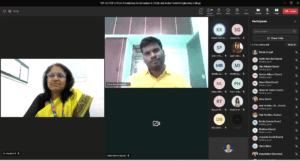
The Department of Electronics & Telecommunications Engineering, Shah & Anchor Kutchhi Engineering College (Autonomous), Mumbai, in collaboration with IETE-SAKEC & IIC-SAKEC successfully organized a Six-Day Online Faculty Development Programme (FDP) on “Agentic AI for Service Sector Applications: Healthcare, Education, Finance and Beyond” from 22nd to 27th June 2026 through the Microsoft Teams platform. The FDP aimed to familiarize faculty members, researchers, students, and industry professionals with the rapidly evolving field of Agentic AI and its transformative applications across major service sectors.

The programme was coordinated by Dr. Vinutha T. P. and Ms. Shilpa Patil, Faculty Coordinators, who meticulously planned and executed the six-day event, ensuring seamless coordination of technical sessions, participant engagement, and interactions with the distinguished resource persons. The FDP witnessed the enthusiastic participation of 34 faculty members, researchers, and academicians from various institutions, fostering a collaborative platform for learning and knowledge exchange.

The six-day FDP featured eminent academicians and industry experts from premier institutions and organizations who shared their expertise through technical sessions, demonstrations, case studies, hands-on activities, and interactive discussions.

On Day 1, Dr. Sriparna Saha, Associate Professor, Department of Computer Science and Engineering, IIT Patna, delivered an insightful session on “The Next Frontier – Agentic AI Transforming the Service Economy”, followed by a discussion on Agentic AI Applications Across Service Sectors. The sessions introduced participants to the evolution of Agentic AI, autonomous intelligent systems, and their transformative impact on healthcare, education, finance, logistics, and customer service. Later, Dr. Sanjan Gupta, Lead Machine Learning Scientist, conducted an engaging session on “Conceptual Foundations and Architecture of Agentic AI Systems”, explaining the key architectural components of intelligent agents. The day concluded with a hands-on exercise on designing agent architectures, enabling participants to understand the workflow of autonomous AI systems.

On Day 2, Dr. Sujitha S. Kurup, Founder of Inovays (Inoque Consulting Pvt. Ltd.), introduced participants to “Building Intelligent Service Agents – Tools, Frameworks and Development Platforms”, followed by a live demonstration of agent development frameworks. In the afternoon, Dr. Sanjan Gupta conducted a practical session on “Simulating Agentic Decision-Making using Python and Large Language Models”, demonstrating the integration of Python and LLMs for intelligent decision-making. The day concluded with a guided laboratory activity that provided participants with practical exposure to designing and implementing AI agent workflows.

Day 3 focused on the transformative role of Agentic AI in education. Dr. Sunita Barve, Professor and Deputy Director (Academics & Research), MIT Academy of Engineering, Pune, delivered sessions on “Agentic AI in Education – Intelligent Tutoring and Adaptive Learning Systems” and “Designing AI Teaching Assistants for Personalized Learning.” She presented several real-world case studies on AI-powered learning platforms and guided participants through a mini-project on educational agent design. The sessions highlighted how AI can support personalized learning, adaptive assessments, intelligent tutoring systems, and enhanced teaching practices.

On Day 4, the focus shifted to healthcare applications and responsible AI. Dr. Deepak Garg, Director, LeadingIndia.ai, delivered an enlightening session on “Ethics, Morality and Legal Context of AI: Opportunities and Challenges,”

discussing responsible AI, governance, transparency, fairness, privacy, and regulatory aspects. This was followed by a session by Dr. Sanjan Gupta on “Agentic AI Applications in Clinical Decision Support and Patient Engagement,” demonstrating practical healthcare applications of intelligent agents. The day concluded with Dr. Sriparna Saha’s session on “Designing an AI Agent for Personalized Healthcare Assistance,” where participants explored AI-enabled patient support systems, health monitoring, and personalized healthcare solutions.

On Day 5, Mr. Nitin Kukreja, Generative AI Expert at the National Payments Corporation of India (NPCI), delivered a series of sessions on “Agentic AI in Financial Services – Risk Management and Personalized Banking,” “AI in Banking and Financial Services,” and “Agentic AI in Finance and Digital Payment Ecosystems.” Through case studies and a financial agent design exercise, participants gained valuable insights into fraud detection, digital payment systems, personalized banking, and intelligent financial assistants.

The FDP concluded on Day 6 with sessions on emerging developments in Agentic AI. Dr. Sujitha S. Kurup discussed “Multi-Agent Systems and Emerging Trends in Agentic AI” and “Responsible AI, Governance and Security in Agentic AI Systems.” Dr. Rohan Borgalli, Assistant Professor, Department of Electronics & Telecommunications Engineering, SAKEC, presented a session on “Human-AI Collaboration and the Future of Work,” emphasizing the evolving relationship between humans and intelligent systems. The final technical session, “Agentic AI for Research and Innovation,” was delivered by Dr. Sriparna Saha, highlighting the role of Agentic AI in accelerating research and fostering innovation across disciplines.

The FDP received highly positive feedback from the 34 participants, who appreciated the well-structured sessions, expert resource persons, practical demonstrations, and interactive discussions. The programme successfully achieved its objectives by providing participants with a comprehensive understanding of Agentic AI concepts, architectures, development frameworks, ethical considerations, and domain-specific applications. The knowledge gained during the FDP is expected to enhance teaching practices, inspire interdisciplinary research, and promote the adoption of Agentic AI technologies in academic and professional environments.


Faculty Coordinators:
Dr. Vinutha T. P. – vinutha.tp@sakec.ac.in
Shilpa Patil – shilpa.patil@sakec.ac.in
 

ISTE Approved One Week Short Term Training Program on “Pathways to Ethical and Impactful Research Publications”

Event: ISTE Approved One Week Short Term Training Program on “Pathways to Ethical and Impactful Research Publications”

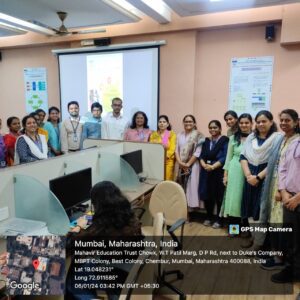
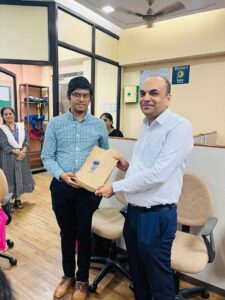
The ISTE-approved One-Week Short-Term Training Program (STTP) on “Pathways to Ethical and Impactful Research Publications”, organized by Research Centre Shah and Anchor Kutchhi Engineering College  in Collaboration with  Computer Engineering and Electronics and Telecommunication Engg. Department from January 25- 22nd February, 2025 – (06 Days). This program aimed to equip researchers with the knowledge and skills required to conduct ethically sound research, publish high-quality work in reputable journals, and build a credible academic profile.

This training program was attended by faculty members, researchers, and students from various institutions, offering them a unique platform to enhance their research skills and knowledge.

Sessions Conducted by Eminent Speakers:

  • Research Paper Writing: From Idea to Publication – Speaker: Dr. Rupali Vairagade. Associate Professor, Cyber Security Department, Shah and Anchor Kutchhi Engineering College
  • Session: : Effective Strategies for Literature Review – Speaker:  Pramod Bhavarthe , Dean, Research & Development, SAKEC
  • Session:Unlocking Knowledge: The Power of Open Access Publishing – Speaker: Dr. Aarti Karande, Assistant Professor, Sardar Patel Institute of Technology
  • Session: Responsible Research Publication: The Art of Selecting Journals & Conferences – Speaker: Dr. Vijay Shelke, Assistant Professor, Fr. Conceicao Rodrigues College of Engineering
  • Session: : Research Tools for Qualitative Research  – Speaker:  Pramod Bhavarthe , Dean, Research & Development, SAKEC
  • Session: : Research Tools for Qualitative Research  – Dr. Avinash Bhute, Associate Professor, Computer Engineering Department, SAKEC

 Key Outcomes:

Enhanced Research Integrity: Participants gained a deep understanding of ethical considerations in research, including issues such as plagiarism, data fabrication, and authorship disputes, enabling them to conduct more responsible and ethical research.

Improved Publication Skills: Attendees learned effective strategies for writing and submitting research papers to high-impact, reputable journals, with a focus on quality content, proper formatting, and successful peer review navigation.

Increased Knowledge of Research Tools and Platforms: The program introduced participants to the latest research tools, databases, and academic platforms, enhancing their ability to conduct literature reviews, manage citations, and streamline the research process.

Strengthened Academic Networking: By engaging with fellow researchers, faculty members, and experts in the field, participants had the opportunity to build a professional network that could support future collaborations and knowledge-sharing.

Development of a Credible Academic Profile: The training helped attendees understand the importance of consistent, high-quality publications in building a strong academic profile, with a focus on strategic career development through impactful research.

Conclusion:

ISTE-approved One-Week Short-Term Training Program on “Pathways to Ethical and Impactful Research Publications” proved to be a highly valuable and insightful experience for all participants. Over the course of six days, faculty members, researchers, and students were equipped with essential tools and knowledge to enhance their research practices and ensure ethical integrity in their work. The program fostered a deeper understanding of how to publish high-quality research in reputable journals and provided valuable strategies for building a credible academic profile. By promoting ethical standards and introducing practical publication strategies, the session empowered participants to contribute more effectively to the academic community and pursue impactful research careers.

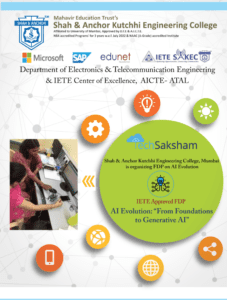
Faculty Development Program (FDP) on “AI Evolution: From Foundations to Generative AI” – January 2024

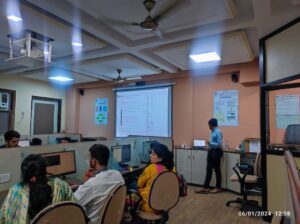
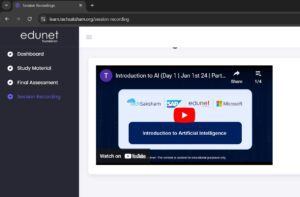
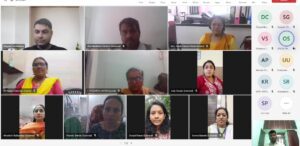
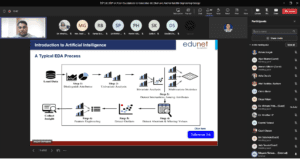
The 6-Day Faculty Development Program (FDP) on “AI Evolution: From Foundations to Generative AI” was a resounding success, organized by IETE-SAKEC, IETE CoE, and TechSaksham (TSP) in collaboration with Edunet Foundation. Supported by TechSaksham (TSP), a joint CSR initiative of Microsoft and SAP, and implemented by Edunet Foundation, this program aimed to enhance technical capacities and foster skill development among faculty members. The comprehensive program covered various AI topics, starting with foundational concepts and progressing to advanced models, with hands-on sessions and expert talks. Dr. T. P. Vinutha, HoD, Department of Electronics & Telecommunication Engineering, Shah and Anchor Kutchhi Engineering College, welcomed participants.

The FDP’s structure ensured a gradual learning curve, covering AI basics, machine learning, deep learning, neural networks, NLP, and Generative AI. Notable sessions included exploring advanced deep learning models and a detailed study on ANN, CNN, RNN, LSTM, NLP, and Generative AI by expert speakers like Mr. Ramar and Mr. Mayank. The international perspective was provided by esteemed speakers Dr. Sanjan T.P. Gupta from Corporate Research Labs, USA, and Mr. Prateek Verma from Stanford University, USA, who delved into applications in healthcare and multimodal Generative AI, respectively.

The program’s success was evident through participant feedback, assessments conducted via the Learning Management System (LMS), and the distribution of certificates, marking a significant contribution to faculty development in Artificial Intelligence. The program concluded with the address of Dr. Bhavesh Patel, Principal, Shah & Anchor Kutchhi Engineering College, Mumbai. In the concluding vote of thanks, thanks were extended to participants, speakers, and sponsors by Mr. Rohan Borgalli, the coordinator. The collaboration with TechSaksham, Microsoft, and SAP, as well as the inclusion of international speakers, enriched the FDP, providing a well-rounded exploration of AI concepts and applications. A total of 144 participants from various colleges in India participated in the faculty development program.


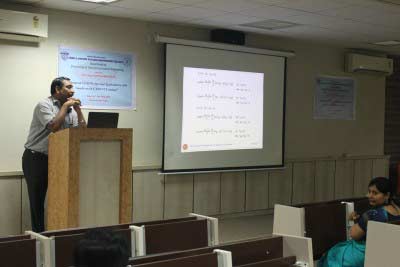
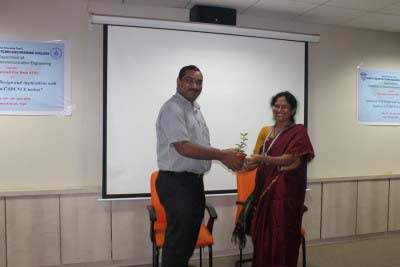
Advanced VLSI Design and Applications with hands-on in CADENCE toolset – June 2018

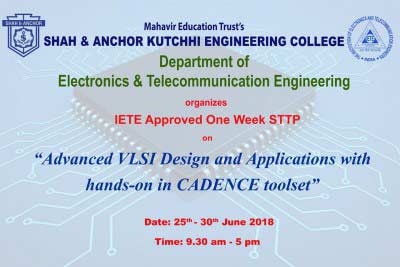
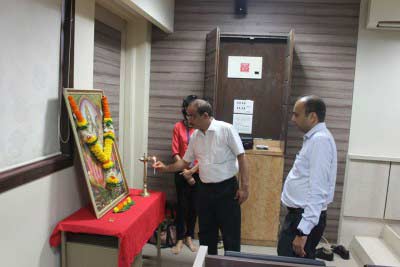
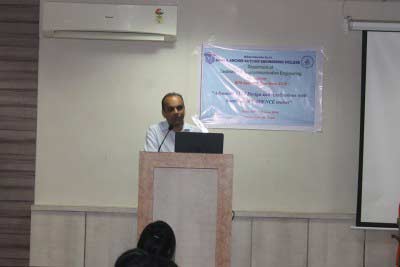
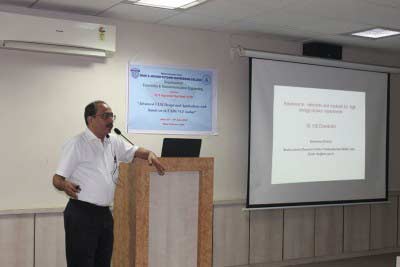
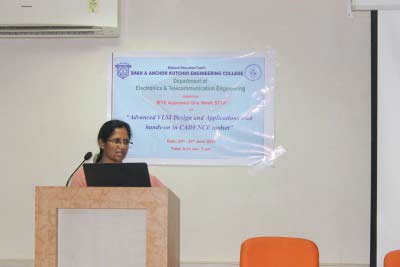
Department of Electronics and Telecommunication Engineering, SAKEC successfully organized an IETE Approved One week STTP on “Advanced VLSI Design and Applications with hands-on in CADENCE toolset” in association with Entuple Technologies from 25th June to 30th June 2018. The Program was inaugurated by Chief Guest and Keynote speaker Dr. V. B. Chandratre, S/O H+, BARC. This STTP included lecture sessions by esteemed speakers from academics and Industry. The core of this STTP was the 3 day Hands-on session on CADENCE tools which was conducted by Entuple Technologies. The hands-on sessions were focused on Custom IC design and ASIC design. The STTP was attended by 47 participants which included faculties and students from various colleges.The STTP was coordinated by Mr. Shridhar R. Sahu, Assistant Professor, Electronics & Telecommunication Engineering Department.

Accredited with 'A' Grade (2021) by NAAC for 5 years
Ranked in band 251-300 (2020) by NIRF
UG Programs for Computer, IT & EXTC Accredited by NBA
UG Programs for Computer & IT granted 'permanent affiliation' by University of Mumbai


Website powered by ALV Works

Enquire Now
Admission 2026-27